

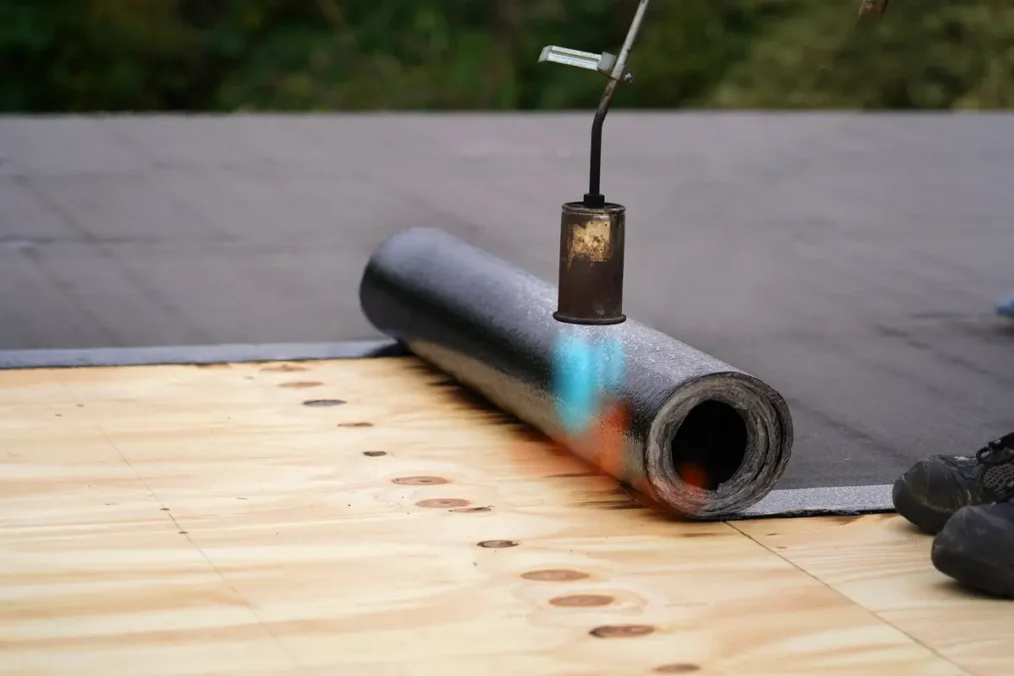
Quick Answer: Torch down roofing is a modified bitumen system applied with open-flame torches to create a seamless, waterproof membrane. It remains one of the most durable and cost-effective options for flat and low-slope roofs, offering superior weather resistance, a lifespan of 15–20+ years, and reliable performance in wet climates like the Pacific Northwest.
Flat roofs have a reputation problem. People assume they leak, crack, or fail within a few years—and sometimes, that reputation is earned. But more often than not, the real issue isn’t the roof’s slope. It’s the roofing system.
Choose the wrong material, and you’re calling a contractor every two or three years. Choose the right one—like torch down roofing—and you’re looking at decades of reliable, low-maintenance protection.
For homeowners and property managers in the Pacific Northwest, where rain is relentless and temperatures swing unpredictably, the stakes are especially high. Here’s why torch down roofing has stood the test of time, and why it continues to be a go-to solution for flat and low-slope roofs across the region.
Key Takeaways
- Torch down roofing uses heat-welded modified bitumen sheets to create a seamless, waterproof membrane that outperforms many other flat roofing systems in wet and variable climates.
- The system typically lasts 15–20+ years with proper installation and routine maintenance, offering strong long-term value.
- For property owners in North Bend, WA, working with an experienced North Bend WA roofing contractor ensures correct installation and maximizes the system’s lifespan.
What Is Torch Down Roofing?
Torch down roofing is a modified bitumen roofing system. Installers use open-flame propane torches to heat and bond layers of asphalt-based sheets directly to the roof surface. The heat melts the underside of each sheet, fusing it to the layer below and creating a watertight seal without seams or gaps.
Most systems use two or three layers:
- Base sheet: Provides structural support and adheres to the roof deck.
- Modified bitumen cap sheet: The outer layer, typically reinforced with polyester or fiberglass and sometimes finished with granules for UV protection.
The result is a thick, flexible, continuous membrane that moves with the building as temperatures change—without cracking or separating.
Why Does Torch Down Roofing Outperform Other Flat Roofing Systems?
Flat roofing options include EPDM rubber, TPO membranes, built-up roofing (BUR), and modified bitumen systems like torch down roofing. Each has its place, but modified bitumen consistently earns high marks for durability, weather resistance, and ease of repair.
How does torch down roofing perform in wet climates?
The Pacific Northwest gets an average of 37–50+ inches of rain per year depending on the location. For North Bend, WA, situated in the Snoqualmie Valley at the base of the Cascades, that means heavy seasonal rainfall, snow at higher elevations, and significant freeze-thaw cycling.
Torch down roofing handles this environment exceptionally well because:
- The heat-welded seams eliminate weak points. Unlike adhesive or mechanically fastened systems, torch-applied seams bond at the molecular level, leaving no gaps for water to enter.
- Modified bitumen is flexible. The polymer modifiers in the asphalt—typically APP (atactic polypropylene) or SBS (styrene-butadiene-styrene)—allow the membrane to expand and contract without cracking. SBS-modified systems are especially well-suited to cold climates.
- Granule-surfaced cap sheets reflect UV and resist impact. This matters during summer months and during hailstorms, which aren’t uncommon in the foothills.
What is the lifespan of a torch down roof?
A properly installed torch down roofing system typically lasts 15 to 20 years. With professional maintenance—annual inspections, cleared drains, and prompt patching of minor damage—some systems perform well beyond the 20-year mark.
By comparison, basic EPDM rubber roofs often require more frequent repairs, and built-up roofing (BUR) systems, while durable, are heavier and more labor-intensive to install. Torch down roofing sits in a strong middle ground: long-lasting, relatively straightforward to repair, and well-suited to residential and commercial applications alike.
What Are the Benefits of Torch Down Roofing for Homeowners?
Beyond weather performance, torch down roofing offers several practical advantages for property owners.
Lower maintenance costs over time. The seamless membrane reduces the number of vulnerable points on the roof. Fewer seams mean fewer opportunities for leaks, which translates to fewer emergency repair calls and lower long-term maintenance costs.
Energy efficiency options. White or light-colored granule-surfaced cap sheets reflect solar heat, reducing cooling loads during warmer months. This can make a noticeable difference in energy bills for buildings with significant flat roof area.
Versatility. Torch down roofing works on a wide range of flat and low-slope applications—residential additions, commercial buildings, garages, and multi-family properties. It also layers well over existing roofing in some re-roofing scenarios, though a qualified contractor should always assess the existing substrate first.
Repairability. When damage does occur, repairs are straightforward. A skilled North Bend WA roofing contractor can patch localized damage quickly using compatible materials and a torch, restoring the waterproof seal without replacing the entire system.
Is Torch Down Roofing Right for Your Property?
Torch down roofing is an excellent choice if:
- Your roof has a flat or low slope (typically 0.25:12 to 2:12 pitch)
- You’re in a high-rainfall or freeze-thaw climate
- You want a long-lasting system with a proven performance record
- You’re prioritizing lower long-term maintenance costs over the lowest possible upfront price
It may not be the best fit for steep-slope roofs, where standard asphalt shingles or metal roofing are more appropriate. The installation process also requires a licensed professional—open-flame torching near roofing materials is not a DIY project.
How Anderson Roofing Installs Torch Down Roofing in North Bend, WA
Proper installation is everything with torch down roofing. An improperly applied torch can under-heat the membrane (leaving weak bonds) or over-heat it (damaging the material). Neither scenario ends well.
At Anderson Roofing, our team of experienced North Bend WA roofing contractors follows a detailed installation process:
- Roof deck inspection and preparation — We assess the existing substrate for damage, moisture, or structural issues before any material goes down.
- Base sheet installation — The base layer is mechanically fastened or adhered to the clean, dry deck.
- Torch application of the cap sheet — Each sheet is carefully heated and rolled into place, with seams overlapped and fully fused.
- Final inspection — We inspect every seam and edge to confirm complete adhesion and a watertight finish.
Working with a local North Bend WA roofing contractor also means faster response times, familiarity with local building codes, and knowledge of how regional weather conditions affect roofing decisions.
The Bottom Line on Torch Down Roofing
Torch down roofing remains one of the most reliable flat roofing systems available—not because it’s trendy, but because it works. The combination of heat-welded seams, flexible modified bitumen, and long service life makes it a smart investment for flat and low-slope roofs in challenging climates like the Pacific Northwest.
If your property has a flat roof that’s aging, leaking, or due for replacement, torch down roofing deserves serious consideration. Contact Anderson Roofing today for a free inspection and quote from your trusted North Bend WA roofing contractor.
Frequently Asked Questions
How long does torch down roofing last?
A professionally installed torch down roofing system typically lasts 15 to 20 years. With regular maintenance and prompt repairs, some systems exceed 20 years.
Is torch down roofing suitable for cold and wet climates?
Yes. SBS-modified bitumen systems—the most common type of torch down roofing—are specifically engineered for cold, wet climates. The rubber polymer modifiers keep the membrane flexible in low temperatures, preventing cracking and seal failure.
How much does torch down roofing cost?
Costs vary based on roof size, accessibility, the number of layers, and local labor rates. A qualified North Bend WA roofing contractor can provide a detailed quote after assessing your specific roof.
Can torch down roofing be installed over an existing roof?
In some cases, yes. Whether overlay installation is appropriate depends on the condition of the existing roof deck and the current membrane. A professional inspection is required before making this decision.
How do I find a qualified torch down roofing contractor in North Bend, WA?
Look for a licensed, insured North Bend WA roofing contractor with documented experience in modified bitumen systems. Ask for references, proof of licensing, and a written warranty on both materials and labor.