

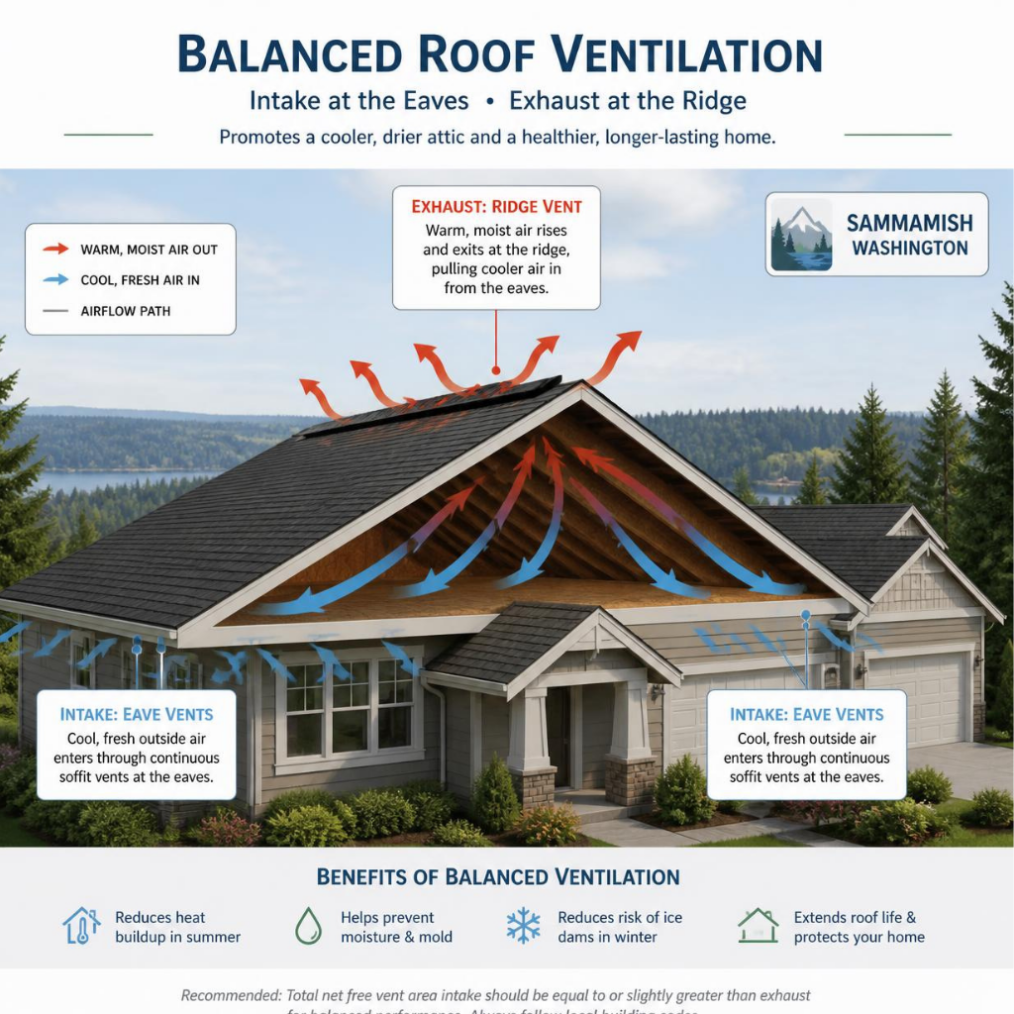
Quick answer: Balanced roof ventilation pairs intake vents (near the eaves) with exhaust vents (near the ridge) to keep steady airflow moving through your attic. This airflow controls heat and moisture—two forces that quietly destroy roofing materials. A properly balanced system can add years to your roof by preventing rot, warping, and premature shingle failure.
Most homeowners never think about their attic until something goes wrong. A water stain appears on the ceiling. Shingles start to curl. The upstairs feels like an oven in July. More often than not, the root cause traces back to one overlooked system: ventilation.
Your roof isn’t just shingles and underlayment. It’s a working system that needs to breathe. When intake and exhaust vents are balanced, air flows in low and out high, carrying away heat and moisture before they cause damage. When that balance is off—or missing entirely—your roof pays the price.
This post breaks down how balanced roof ventilation works, why it matters for roof longevity, and what homeowners in the Pacific Northwest should watch for. If you’re dealing with roofing concerns and searching for roof ventilation Sammamish WA, understanding these fundamentals will help you make smarter decisions about your home.
Key Takeaways
- Balanced ventilation requires both intake and exhaust vents working together—intake near the eaves and exhaust near the ridge—to keep air moving through your attic.
- Poor ventilation shortens roof life by trapping heat and moisture, which leads to rot, mold, warped decking, and shingles that fail years ahead of schedule.
- Homes in wet, variable climates like Sammamish, WA benefit especially from a well-designed system that manages moisture year-round and protects your roofing investment.
What Is Balanced Roof Ventilation?
Balanced roof ventilation means your attic has roughly equal amounts of intake and exhaust airflow. Think of it like breathing—you can’t just exhale without inhaling.
Intake vents sit low on the roof, usually along the soffits or eaves. They pull cool, fresh air into the attic. Exhaust vents sit high, near the ridge, and let warm, stale air escape. As hot air rises and exits through the top, fresh air gets drawn in from below. This natural cycle keeps air constantly moving.
The general rule most roofing professionals follow: aim for a 50/50 split between intake and exhaust. If one side outweighs the other, the system loses efficiency. Too much exhaust with too little intake, for example, can cause vents to pull air from other exhaust openings instead of the soffits—creating dead zones where moisture builds up.
How Does Poor Ventilation Damage a Roof?
When airflow stalls, two enemies take over: heat and moisture.
Trapped heat builds up fast in a poorly vented attic. During summer, attic temperatures can climb well above 130°F. That heat bakes your shingles from below, causing them to crack, curl, and age prematurely. It also radiates into your living space, forcing your air conditioner to work harder and driving up energy bills.
Trapped moisture is even sneakier. Everyday activities—showering, cooking, doing laundry—release water vapor that rises into the attic. Without proper airflow, that moisture condenses on the underside of the roof deck. Over time, this leads to:
- Wood rot in the decking and rafters
- Mold and mildew growth
- Warped or sagging roof sheathing
- Rusted fasteners and hardware
- Ruined insulation that loses its R-value
In colder months, poor ventilation also contributes to ice dams. Warm attic air melts snow on the roof, which refreezes at the cold eaves and forces water back under the shingles.
Why Does Balanced Ventilation Extend Roof Life?
A roof that stays cool and dry simply lasts longer. Here’s why balance matters so much.
When intake and exhaust work together, your attic maintains a temperature closer to the outside air. Shingles stay within their designed temperature range, so they don’t degrade early. The decking stays dry, which protects the structural bones of your roof. Insulation keeps performing as intended.
Manufacturers know this too. Many shingle warranties actually require adequate ventilation. If an inspection reveals your attic wasn’t properly vented, a warranty claim can be denied. Balanced roof ventilation isn’t just good practice—it can be the difference between a covered repair and an expensive out-of-pocket bill.
The payoff is straightforward: a well-ventilated roof can reach or exceed its full expected lifespan, while a poorly ventilated one often fails years early.
Why Does Ventilation Matter So Much in Sammamish, WA?
The Pacific Northwest climate creates a specific set of challenges. Homeowners searching for roof ventilation Sammamish WA are usually dealing with one thing above all: moisture.
Sammamish sees frequent rain, high humidity, and temperature swings between seasons. All that dampness means attics here are especially prone to condensation problems. Without balanced airflow to flush out moist air, the risk of rot and mold climbs quickly.
The region’s mild-but-wet winters also make ice dams and trapped condensation ongoing concerns. A ventilation system tuned for this climate keeps moisture moving out year-round, not just in summer. For local homes, proper ventilation isn’t a luxury—it’s essential protection against a climate that constantly tests your roof.
Signs Your Roof May Have a Ventilation Problem
You don’t need to climb into your attic to spot warning signs. Watch for:
- Rooms upstairs that feel much hotter than the rest of the house
- Higher-than-normal cooling bills in summer
- Ice buildup along the roof edges in winter
- A musty smell in the attic or top floor
- Visible mold, water stains, or damp insulation
- Curling, cracking, or prematurely aging shingles
If any of these sound familiar, it’s worth having a professional evaluate your ventilation setup.
Protect Your Roof Before Problems Start
Balanced intake and exhaust ventilation is one of the most cost-effective ways to protect your roofing investment. It keeps your attic cool, dry, and healthy—which directly translates to a longer roof life, lower energy bills, and fewer surprise repairs.
If you’re unsure whether your home has the right balance, don’t wait for a leak or a ceiling stain to find out. A professional assessment can identify gaps in your current system and recommend the right mix of intake and exhaust for your specific home and climate.
Anderson Roofing helps homeowners get their ventilation right the first time. Reach out for an inspection and make sure your roof is set up to last.
Frequently Asked Questions
How much ventilation does my roof need?
A common guideline is one square foot of ventilation for every 300 square feet of attic floor space, split evenly between intake and exhaust. The exact amount depends on your roof design and local code, so a professional assessment gives the most accurate answer.
Can I have too much roof ventilation?
Yes. Too many exhaust vents without matching intake can actually reduce airflow and pull conditioned air from your living space. Balance—not maximum quantity—is the goal.
What’s the difference between intake and exhaust vents?
Intake vents (like soffit vents) sit low and bring fresh air in. Exhaust vents (like ridge vents) sit high and let hot, moist air out. Both are needed for a working system.
Does roof ventilation help in winter too?
Absolutely. In winter, balanced ventilation removes moist indoor air that would otherwise condense in the attic, and it helps prevent ice dams by keeping the roof deck temperature consistent.
How do I know if my Sammamish home has a ventilation problem?
Look for musty smells, damp insulation, mold, ice dams, or upstairs rooms that overheat. If you notice any of these, a local roofing professional can inspect your attic and confirm whether your ventilation is balanced.