

TL;DR: Roof ventilation regulates attic temperature and moisture year-round, preventing structural damage, high energy bills, and premature roof failure. Most homeowners overlook it—until something goes wrong. Proper ventilation requires a balanced system of intake and exhaust vents sized correctly for your home.
Most homeowners think about their roof when it leaks—or when it’s time to replace it. Roof ventilation rarely makes the list. But this overlooked system quietly determines how long your roof lasts, how comfortable your home feels, and how high your energy bills climb.
The truth is, poor ventilation causes more preventable roofing damage than almost any other factor. The good news? It’s one of the most straightforward problems to fix—once you know what to look for.
Key Takeaways
- Roof ventilation regulates attic heat and moisture, protecting your roof structure, insulation, and interior comfort year-round.
- Poor ventilation leads to premature shingle failure, ice dams, mold growth, and higher energy costs.
- A balanced intake-to-exhaust ventilation system is essential for any home—especially in climates with cold winters and warm summers, like Yarrow Point, WA.
What Is Roof Ventilation and How Does It Work?
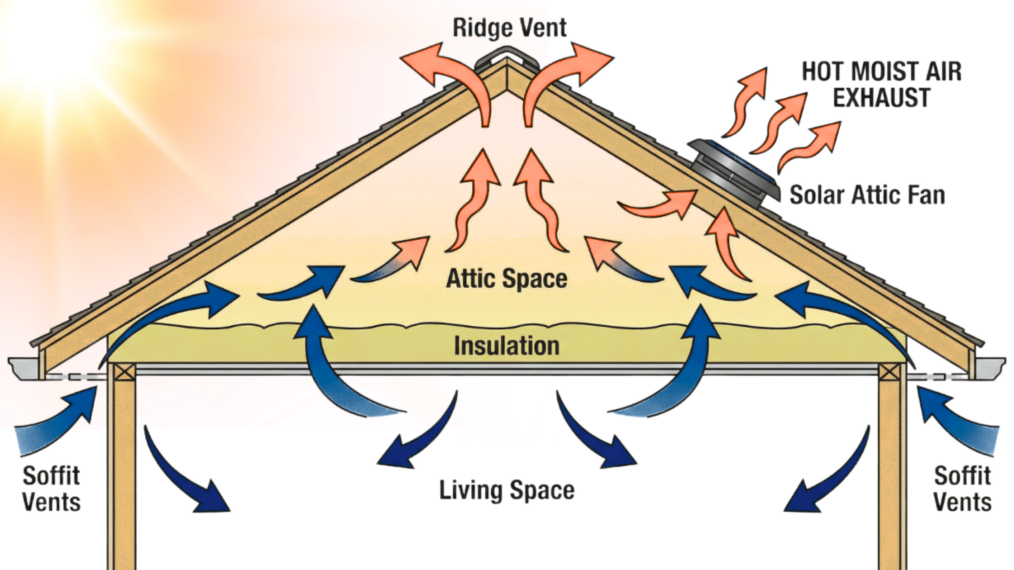
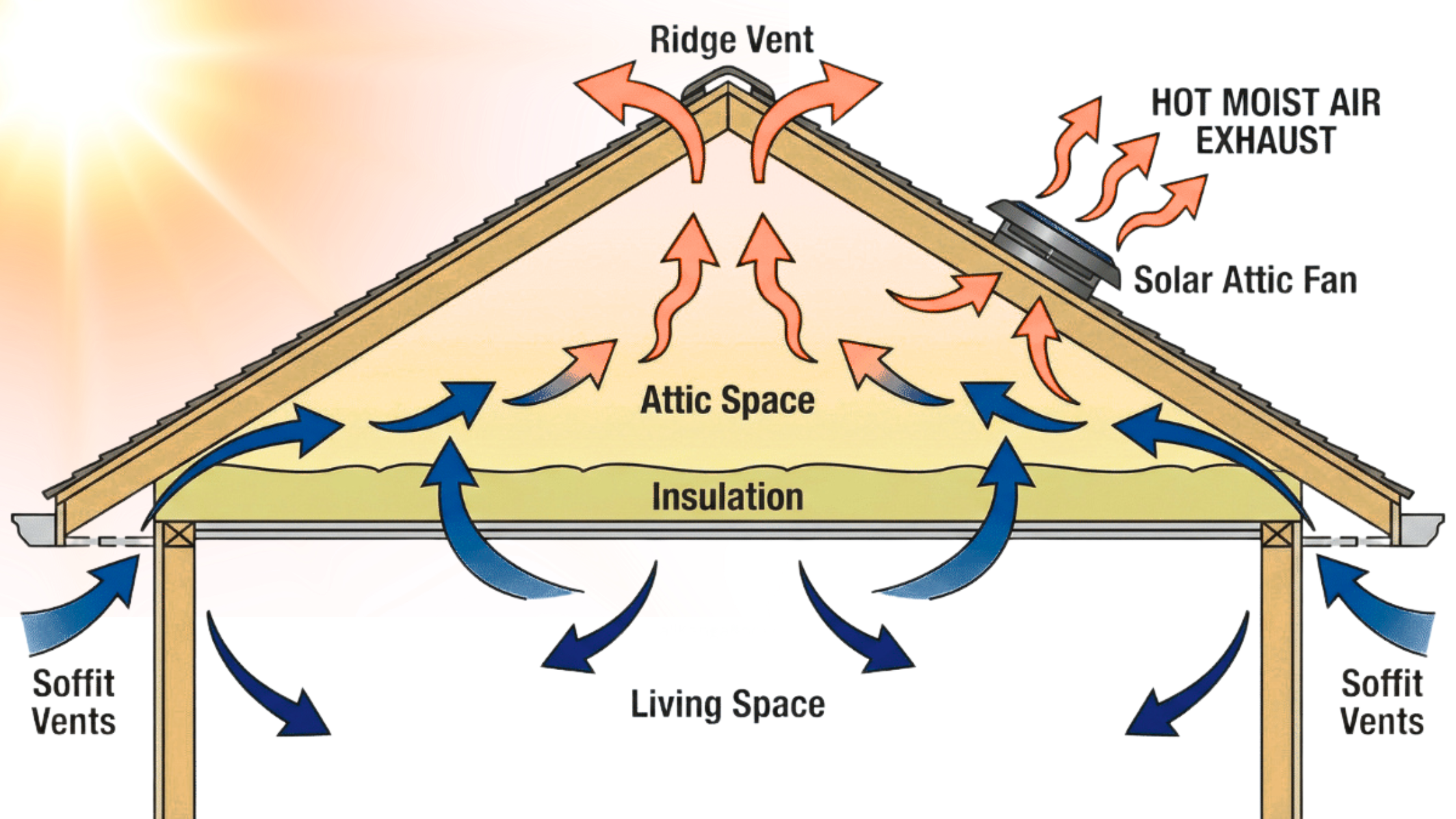
Roof ventilation is a system that allows outside air to flow through your attic space, regulating temperature and humidity. It works by pairing intake vents—typically installed at the soffits (the underside of your eaves)—with exhaust vents near the roof’s peak.
Cool, fresh air enters at the bottom. Warm, moist air escapes at the top. It sounds simple, but the balance matters enormously. Too little ventilation traps heat and moisture. Too much, or a poorly distributed system, can create pressure imbalances or even pull conditioned air out of your living spaces.
The International Residential Code (IRC) recommends a minimum of 1 square foot of net free ventilation area for every 150 square feet of attic floor space—or 1:300 if a vapor barrier is present. Many homes fall short of this standard without the owners ever realizing it.
Why Poor Roof Ventilation Causes So Much Damage
How does heat buildup in the attic affect roofing materials?
On a sunny summer day, an unventilated attic can reach temperatures above 150°F. That kind of heat doesn’t stay in the attic—it radiates down into your living spaces and bakes the underside of your roof deck and shingles simultaneously.
Asphalt shingles are particularly vulnerable. Prolonged heat exposure causes them to crack, curl, and shed granules years before their rated lifespan. A 30-year shingle installed over a poorly ventilated attic may fail in 15. That’s a significant financial loss that proper roof ventilation could have prevented.
What damage does attic moisture cause in Pacific Northwest homes?
The Pacific Northwest is no stranger to moisture. In areas like Yarrow Point, WA, damp winters create ideal conditions for condensation buildup in under-ventilated attics. When warm air from your living space rises and meets a cold roof deck, it condenses—and over time, that moisture soaks into the wood.
The result: rot, mold, and compromised structural integrity. Mold in particular spreads quickly once established and can migrate into insulation and walls. Remediation is expensive and disruptive. Consistent roof ventilation keeps attic air moving and prevents condensation from accumulating in the first place.
What are ice dams and how does roof ventilation prevent them?
Ice dams are a common and costly problem in colder climates. They form when a warm attic melts snow on the roof’s middle section, sending water running down toward the colder eaves—where it refreezes into a ridge of ice.
As that ice dam grows, it forces water back up under the shingles. From there, it seeps into the roof deck, insulation, and sometimes ceilings and walls. Proper roof ventilation keeps attic temperatures consistent and close to the outside air temperature, so snow melts evenly—or not at all—rather than creating the conditions for ice dam formation.
The Connection Between Roof Ventilation and Energy Costs
A hot attic is essentially a heat source sitting directly above your living space. Your air conditioning system has to work harder to compensate, driving up energy consumption during summer months.
According to the U.S. Department of Energy, attic heat gain is one of the primary contributors to summer cooling costs in residential homes. Improving roof ventilation reduces this thermal load, which translates directly into lower utility bills. For homeowners in Yarrow Point, WA, the savings apply in both seasons—keeping the attic cooler in summer and reducing moisture-related heating inefficiency in winter.
Signs Your Home May Have a Roof Ventilation Problem
You don’t need to climb into your attic to spot the warning signs. Look for:
- Temperature imbalance: Upper floors are noticeably hotter than lower floors in summer
- Ice dams: Ridges of ice forming along the eaves after snowfall
- High energy bills: Unexplained spikes in cooling or heating costs
- Premature shingle aging: Curling, cracking, or granule loss on a relatively new roof
- Attic moisture: Condensation, staining, or a musty smell when you access the attic
- Mold in the attic: Visible dark patches on wood framing or sheathing
Any one of these signs warrants a professional inspection. Caught early, a ventilation issue is inexpensive to correct. Left alone, the downstream damage can require a full roof replacement.
What a Properly Ventilated Roof Looks Like
A well-designed roof ventilation system is balanced and continuous. Every component plays a role:
- Soffit vents provide the primary air intake, drawing cool outside air into the attic along the eaves
- Ridge vents run along the peak of the roof, allowing warm air to exhaust naturally through convection
- Gable vents can supplement airflow but are less effective as a standalone system
- Powered attic fans can assist in extreme heat but should be sized carefully to avoid depressurizing the attic
The key is balance. Adding exhaust capacity without equivalent intake creates negative pressure, which can draw conditioned air from the living space—wasting energy and reducing effectiveness. A qualified Yarrow Point WA roofer can assess your current system and recommend the right configuration for your home’s size and design.
Protecting Your Investment Starts at the Top
Your roof is one of the most expensive components of your home. Protecting it doesn’t just mean choosing quality shingles or scheduling regular inspections—it means ensuring the entire system, including roof ventilation, is working as it should.
Anderson Roofing helps homeowners across Yarrow Point, WA identify ventilation issues before they become costly problems. Whether you’re dealing with ice dams, rising energy bills, or early shingle wear, our team can assess your attic and recommend a solution built for your home and climate. Contact Anderson Roofing today for a professional ventilation inspection.
Frequently Asked Questions
How do I know if my roof has enough ventilation?
The IRC recommends 1 square foot of net free ventilation area per 150 square feet of attic floor space. Signs of inadequate ventilation include temperature imbalances between floors, premature shingle wear, ice dams, and attic moisture or mold. A roofing professional can measure your existing ventilation and compare it to code requirements.
Can too much roof ventilation cause problems?
Yes. Over-ventilation or an imbalanced system—more exhaust than intake—can create negative attic pressure, which pulls conditioned air from inside the home. This drives up energy costs and reduces the system’s effectiveness. Ventilation should always be assessed as a complete, balanced system.
How long does it take to fix a roof ventilation problem?
Most ventilation corrections are completed in a single day. Adding soffit vents, installing a ridge vent, or replacing inadequate gable vents are routine jobs for an experienced roofer. The timeline depends on the scope of the problem and roof complexity.
Does roof ventilation matter more in certain climates?
Yes. Homes in climates with significant temperature swings—hot summers and cold, wet winters—benefit most from proper ventilation. In Yarrow Point, WA, both seasonal extremes create conditions where poor ventilation causes measurable damage, making it especially important for local homeowners to get it right.
Will improving roof ventilation lower my energy bills?
Reducing attic heat gain through improved ventilation typically lowers summer cooling costs. According to the U.S. Department of Energy, attic heat gain is a primary driver of residential cooling expenses. Results vary depending on insulation levels, home design, and the severity of the existing ventilation problem.