

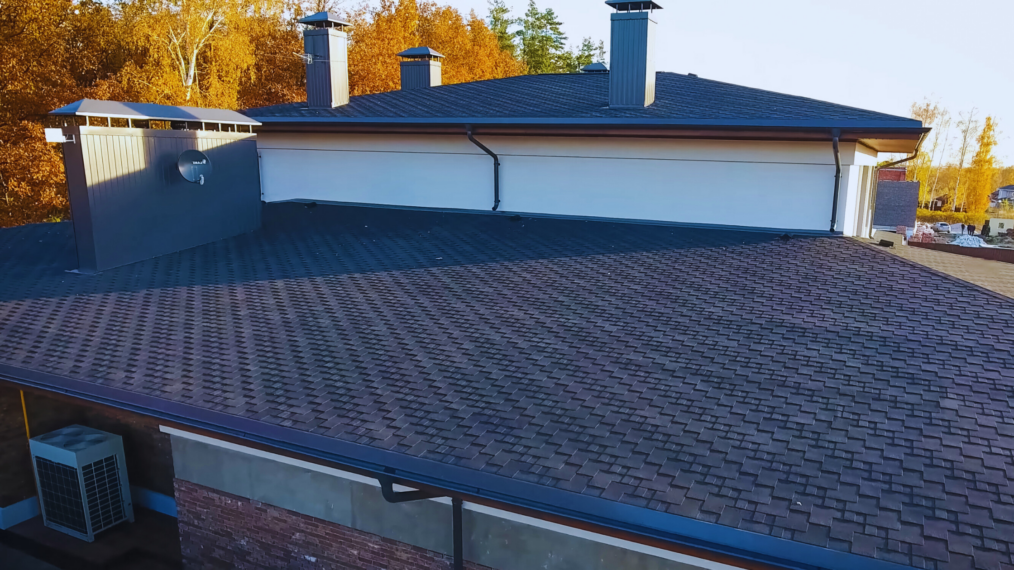
If you’ve ever gotten a roofing quote and wondered why costs vary so much from one home to the next, roof pitch is often the answer. It’s one of the most important—and most misunderstood—factors in any residential roofing installation.
Roof pitch affects everything from material selection and labor time to drainage performance and long-term durability. Get it right, and your roof will serve you well for decades. Overlook it, and you could be dealing with leaks, premature wear, or a full replacement sooner than expected.
This guide breaks down exactly what roof pitch is, how it’s measured, and why it should be front and center in your installation planning. Whether you’re building new or replacing an aging roof, understanding pitch will help you make smarter decisions—and have more informed conversations with your roofing contractor.
Key Takeaways
- Roof pitch directly impacts which materials are suitable, how much labor is involved, and what your installation will cost.
- Low-pitch roofs require specialized waterproofing materials, while steep-pitch roofs demand extra safety measures and labor time.
- Working with an experienced local roofing contractor in Renton, WA ensures your pitch is properly assessed and your installation is built to last.
What Is Roof Pitch?
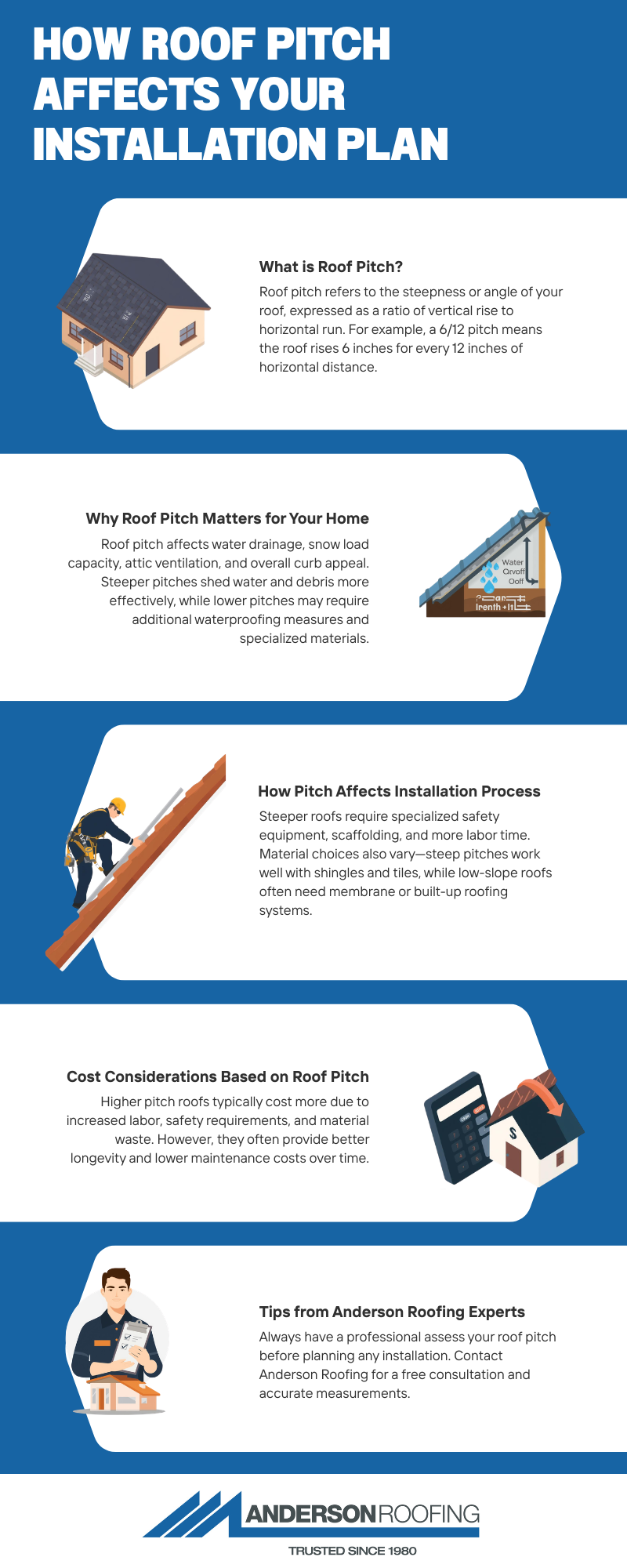
Roof pitch is the measure of how steep your roof is. It’s expressed as a ratio of vertical rise to horizontal run—for example, a 4:12 pitch means the roof rises 4 inches for every 12 inches of horizontal distance.
Pitch is typically categorized into three ranges:
- Low pitch: 1:12 to 3:12 — A nearly flat roof with minimal slope
- Moderate pitch: 4:12 to 9:12 — The most common range for residential homes
- Steep pitch: 10:12 and above — Found on dramatic architectural styles like A-frames or certain Victorian homes
Each category comes with its own set of installation requirements, material options, and challenges.
Why Pitch Matters More Than You Think
Pitch isn’t just an aesthetic choice. It plays a direct role in how your roof performs, how long it lasts, and how much it costs to install or repair.
Water and Snow Drainage
The steeper the pitch, the faster water and snow slide off. This matters a lot in the Pacific Northwest, where rainfall is heavy and sustained. A low-pitch roof holds water longer, which puts more pressure on your roofing materials to stay watertight. On a steeper roof, gravity does much of the drainage work for you.
Material Compatibility
Not all roofing materials work on every pitch. Each product has a minimum pitch requirement set by the manufacturer, and ignoring those specs can void your warranty and lead to early failure.
Here’s a quick breakdown:
- Asphalt shingles typically require a minimum pitch of 2:12 (with underlayment modifications) and perform best at 4:12 and above
- Metal roofing can be installed at pitches as low as 1:12 with the right panel system and sealant
- Wood shakes and slate generally need at least a 4:12 pitch for proper water runoff
- Flat or low-slope roofing systems (like TPO or EPDM membrane) are specifically engineered for pitches under 3:12
A qualified residential roofing installation professional will assess your pitch before recommending materials—not the other way around.
Labor and Safety Requirements
Steeper roofs are harder to work on. Contractors need specialized equipment, additional safety harnesses, and more time to move carefully across a high-slope surface. That translates to higher labor costs.
Low-pitch roofs present a different challenge. While they’re easier to walk on, they demand more meticulous sealing and waterproofing to compensate for slower drainage. One small gap in a flat-roof membrane can allow water to pool and infiltrate over time.
How Pitch Affects Your Installation Plan
Now that you understand the basics, let’s look at how pitch shapes each stage of the installation process.
Material Selection
Your installer’s first job is matching the right material to your pitch. At Anderson Roofing, we evaluate pitch alongside your budget, aesthetic goals, and the specific weather demands of the Renton, WA area before recommending a product. A material that looks great on a steep-slope showroom display may not be appropriate for your 2:12 garage roof.
For low-pitch roofs, we often recommend built-up roofing (BUR) systems, modified bitumen, or single-ply membranes. These are engineered to handle standing water and provide the watertight seal that low slopes demand. For moderate to steep pitches, the options open up considerably—architectural shingles, metal panels, cedar shakes, and tile all become viable depending on your goals.
Underlayment and Waterproofing
Pitch directly determines how many layers of protection your roof needs beneath the surface material. Low-pitch roofs require heavier-duty underlayment, often with self-adhering ice-and-water shield applied across the entire deck rather than just the eaves. Steep roofs shed water so quickly that a single layer of synthetic underlayment may be sufficient, though local building codes always have the final say.
In Western Washington, ice damming can also be a concern in colder months. Ice dams form when heat escapes through the roof, melts snow, and that water refreezes near the cold eaves. A well-planned underlayment system accounts for this risk based on your specific pitch and insulation setup.
Ventilation Planning
Here’s something many homeowners don’t realize: pitch affects attic ventilation. Steeper roofs typically allow for more attic volume, which makes it easier to achieve the airflow balance required by building codes (usually a 1:150 ratio of ventilation to attic floor space).
Low-pitch roofs leave less room for air to circulate, which can lead to heat buildup in summer and moisture accumulation in winter. Proper ventilation planning during installation prevents both problems—and protects the structural integrity of your roof deck over time.
Cost Estimates
Pitch is one of the primary factors that determines roofing cost per square foot. Steeper roofs require:
- More time on-site
- Additional safety equipment
- More material waste due to complex cuts and angles
- Specialized fastening systems
As a general rule, any roof with a pitch above 7:12 will carry a labor premium. The exact amount varies by contractor and project complexity, but it’s not unusual for steep-slope work to cost 20–30% more in labor than a comparable moderate-pitch installation.
That said, low-pitch roofs can also carry a price premium due to the cost of specialized membrane systems and the precision required in their installation. The sweet spot for cost efficiency tends to fall in the 4:12 to 7:12 range.
Common Pitch-Related Mistakes to Avoid
Even experienced homeowners make avoidable errors when it comes to pitch. Here are a few of the most common:
Using the wrong material for the pitch. Installing standard shingles on a 2:12 roof without the proper underlayment modifications is a code violation in most jurisdictions—and a waterproofing disaster waiting to happen.
Ignoring local climate. A roofing spec that works well in Arizona may be entirely wrong for residential roofing installation in WA. Heavy rain, moss growth, and occasional freezing temperatures all factor into the right pitch-and-material combination for this region.
Underestimating ventilation needs. Sealing up a low-pitch roof without proper ventilation planning traps heat and moisture. Over time, this degrades your decking, insulation, and shingles from the inside out.
Choosing aesthetics over function. It’s tempting to pick a dramatic steep-pitch design because it looks striking. Just make sure the structural framing, load-bearing capacity, and budget all support that choice before committing.
Questions to Ask Your Roofing Contractor
Before signing any contract, these questions will help you gauge whether your contractor has properly accounted for pitch in the project scope:
- What is the current pitch of my roof, and how does that affect material selection?
- Does the product you’re recommending meet the manufacturer’s minimum pitch requirement?
- What underlayment system are you using, and is it appropriate for my pitch and local climate?
- How does pitch affect the labor estimate for this project?
- Are there ventilation considerations I should know about given my roof’s slope?
A knowledgeable roofing contractor in Renton, WA should be able to answer each of these questions clearly and without hesitation.
Make the Right Call from the Start
Roof pitch is one of those details that shapes nearly every decision in an installation project. Material compatibility, drainage performance, labor requirements, ventilation, and cost all trace back to slope. Getting a grip on these connections before your project begins means fewer surprises, better outcomes, and a roof that holds up through whatever the Pacific Northwest throws at it.
At Anderson Roofing, we take the time to assess your roof’s pitch and explain exactly how it shapes our recommendations. We serve homeowners across Renton, WA and the surrounding area with honest guidance and quality craftsmanship on every job.
Ready to start planning your installation? Contact Anderson Roofing today for a free inspection and estimate.