

Living in the Pacific Northwest offers breathtaking scenery, lush greenery, and a mild climate. However, that same climate presents a unique set of challenges for homeowners. The constant moisture, frequent rain, and occasional windstorms can wreak havoc on your home’s first line of defense: the roof.
Ignoring the condition of your roof in this region isn’t just a minor oversight; it is a gamble with your property’s structural integrity. Water intrusion is a silent destroyer, often causing thousands of dollars in rot and mold damage before a single drop hits your living room floor. Regular inspections are the only way to stay ahead of the weather.
This guide provides a comprehensive checklist designed specifically for Northwest Washington homes. By following these steps, you can catch minor issues before they escalate into major disasters, ensuring your home stays dry and secure through every season.
Key Takeaways
- Combat Moisture Early: In the Northwest, moss and algae are not just cosmetic issues; they lift shingles and allow water intrusion, requiring immediate attention.
- Check Inside and Out: An effective inspection starts in the attic looking for light and leaks, then moves to the exterior to check for physical damage.
- Know When to Call a Pro: While visual inspections are great for maintenance, climbing steep, wet roofs is dangerous and best left to professional contractors.
Why Northwest Roofs Age Differently
Before jumping into the checklist, it is helpful to understand what your roof is fighting against. In drier climates, the sun is the primary enemy. In Northwest WA, it is biology and hydrology.
The persistent dampness encourages the growth of moss, algae, and lichen. As these organisms grow, they anchor themselves into the asphalt granules of your shingles. Over time, this lifts the edges of the shingles, breaking the waterproof seal and creating pathways for rain to seep into the wood decking below. Additionally, our freeze-thaw cycles—though less severe than in the Midwest—can expand small cracks in flashing or masonry, turning tiny gaps into significant leaks.
Phase 1: The Interior Inspection (The Attic)
The best time to check your roof isn’t when you are standing on it, but when you are underneath it. Grab a powerful flashlight and head into your attic.
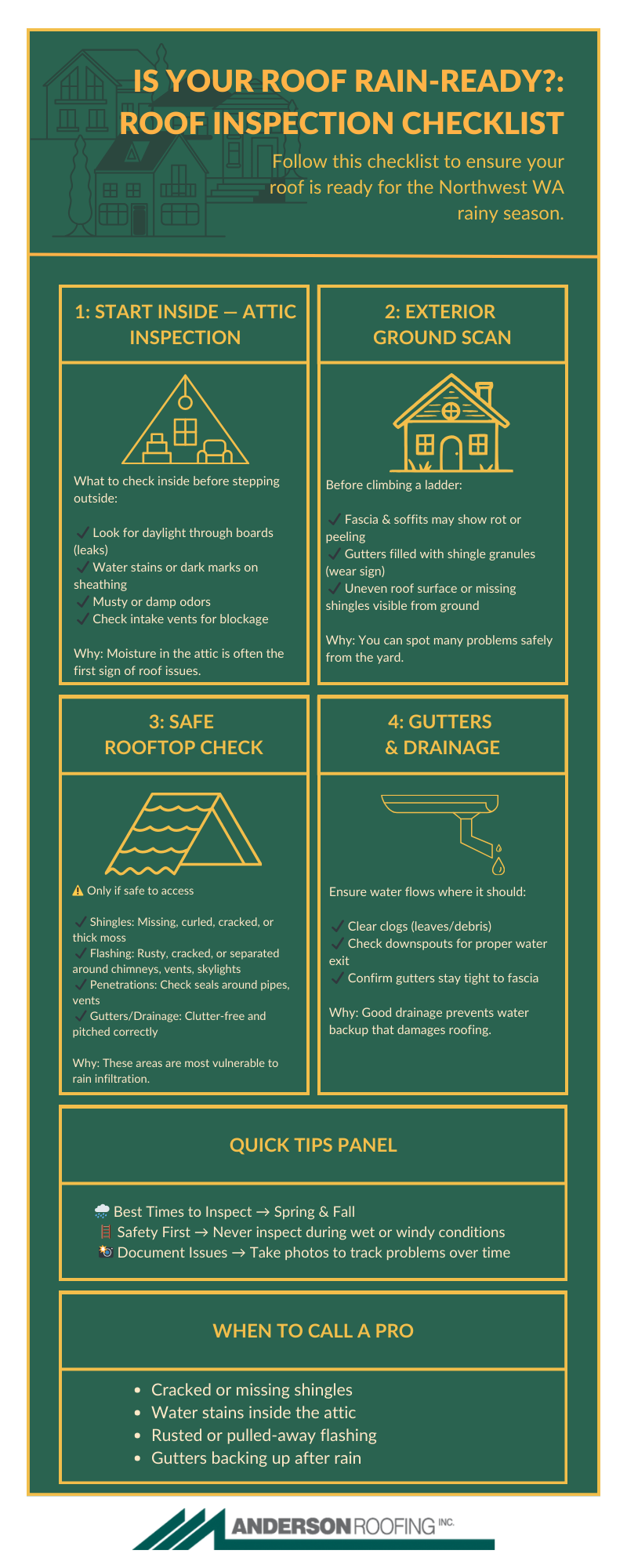
- Look for Light: During the day, turn off the attic lights. If you see streams of daylight coming through the roof boards, you have a clear entry point for water.
- Check for Moisture Marks: Scan the underside of the roof sheathing (the plywood). Dark stains, streaks, or sagging wood indicate that water has already penetrated the outer layer.
- Smell the Air: A musty, damp odor is a strong indicator of poor ventilation or active leaks.
- Inspect Intake Vents: Ensure your soffit vents (near the floor of the attic) are not blocked by insulation. Good airflow is critical for preventing condensation buildup, which can rot your roof from the inside out.
Phase 2: The Exterior Ground Assessment
You can spot many problems without ever leaving the ground. Walk around the perimeter of your home with a pair of binoculars.
- Fascia and Soffits: Look at the boards running along the edge of your roof line. Peeling paint or soft, rotting wood suggests your gutters may be overflowing or leaking.
- Gutter Debris: If you see piles of granules (the sand-like covering on shingles) in your downspouts, your roof is aging. These granules protect the shingles from UV rays; once they are gone, the shingles become brittle.
- Shingle Condition: Look for “telegraphing” problems. Are there shingles on the lawn after a storm? Do you see sections of the roof that look darker or uneven?
Phase 3: The Rooftop Inspection
Note: Safety is paramount. If your roof is steep, wet, or covered in debris, do not climb it. Contact a professional WA Roofing Contractor like Anderson Roofing to handle the physical inspection.
If it is safe to proceed, use a sturdy ladder and check the following specific areas:
1. The Shingles
Scan for shingles that are curling, buckling, or missing entirely. In the Northwest, pay close attention to moss growth. A light dusting of green might seem harmless, but thick pads of moss act like sponges, holding water against the roof surface for weeks. This constant moisture accelerates rot.
2. Flashing and Penetrations
The most common leak points are where the roof meets a vertical surface. Check the metal flashing around:
- Chimneys
- Skylights
- Vent pipes
The flashing should be flush against the roof and sealed with caulk or tar. If the seal is cracked or the metal is rusted, you need to schedule Roof Repair Northwest WA services immediately. Even a pinhole leak in flashing can damage drywall and insulation.
3. Gutters and Downspouts
Your roof can only shed water if there is somewhere for that water to go. Ensure gutters are securely attached to the fascia board and are pitched correctly toward the downspouts. Standing water in a gutter indicates a clog or an improper slope, which can lead to ice dams in the winter or overflow during heavy rains.
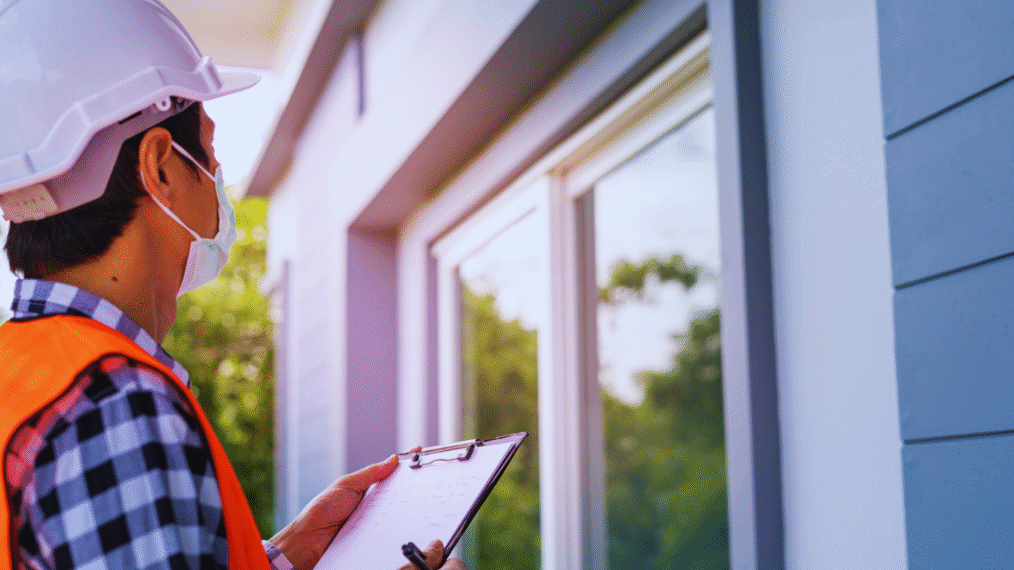
![Image of a home inspector examining roof flashing for rust and damage] Alt tag: A professional inspector examining metal roof flashing for rust and damage on a residential home.
When to DIY and When to Call Anderson Roofing
Homeowners can handle basic maintenance like clearing debris from gutters or sweeping off light pine needles. However, interpreting the severity of wear and tear requires a trained eye.
If you spot cracked shingles, extensive moss growth, or water stains in your attic, professional intervention is necessary. Attempting to patch these issues yourself often leads to temporary fixes that mask deeper structural problems.
A qualified WA Roofing Contractor has the tools and expertise to perform a comprehensive evaluation. They can distinguish between cosmetic aging and functional failure, potentially saving you the cost of a full replacement by performing targeted repairs early.
Protect Your Investment
Your home is likely your largest investment, and your roof is its primary shield. By performing this checklist twice a year—ideally in the spring and fall—you can extend the lifespan of your roof and maintain the value of your property.
Don’t wait for a leak to ruin your ceiling. If your inspection reveals concerning signs, or if you simply want peace of mind from an expert opinion, reach out to Anderson Roofing. We specialize in Roof Repair Northwest WA homeowners rely on to keep their families dry and safe.