

Key Takeaways
- Commercial roofs are typically flat and require heavy-duty membrane materials, while residential roofs usually feature a steep slope and utilize traditional asphalt shingles or tiles.
- The installation process and maintenance requirements differ greatly, with commercial systems needing to support heavy HVAC equipment and foot traffic.
- Working with an experienced professional is essential to guarantee your building meets local codes, whether you need a WA Commercial Roof Installation or a WA Residential Roof Installation.
Looking up at a building, the roof might just seem like a basic structural cover designed to keep the rain out. However, the engineering requirements of a sprawling warehouse are vastly different from those of a standard single-family home. Understanding these distinctions is crucial for property owners preparing for a new construction or replacement project.
The design, materials, and overall lifespan of a roof depend heavily on the building’s specific purpose. A residential home prioritizes curb appeal and efficient water runoff. A commercial facility demands maximum durability to protect large inventories and support heavy mechanical systems.
Anderson Roofing brings years of specialized expertise to every project across Washington. This guide explains the primary differences between commercial and residential roofing systems, helping you make informed decisions for your property’s long-term protection.
Structural Design and Slope
The most visible difference between residential and commercial roofs is their overall shape and slope.
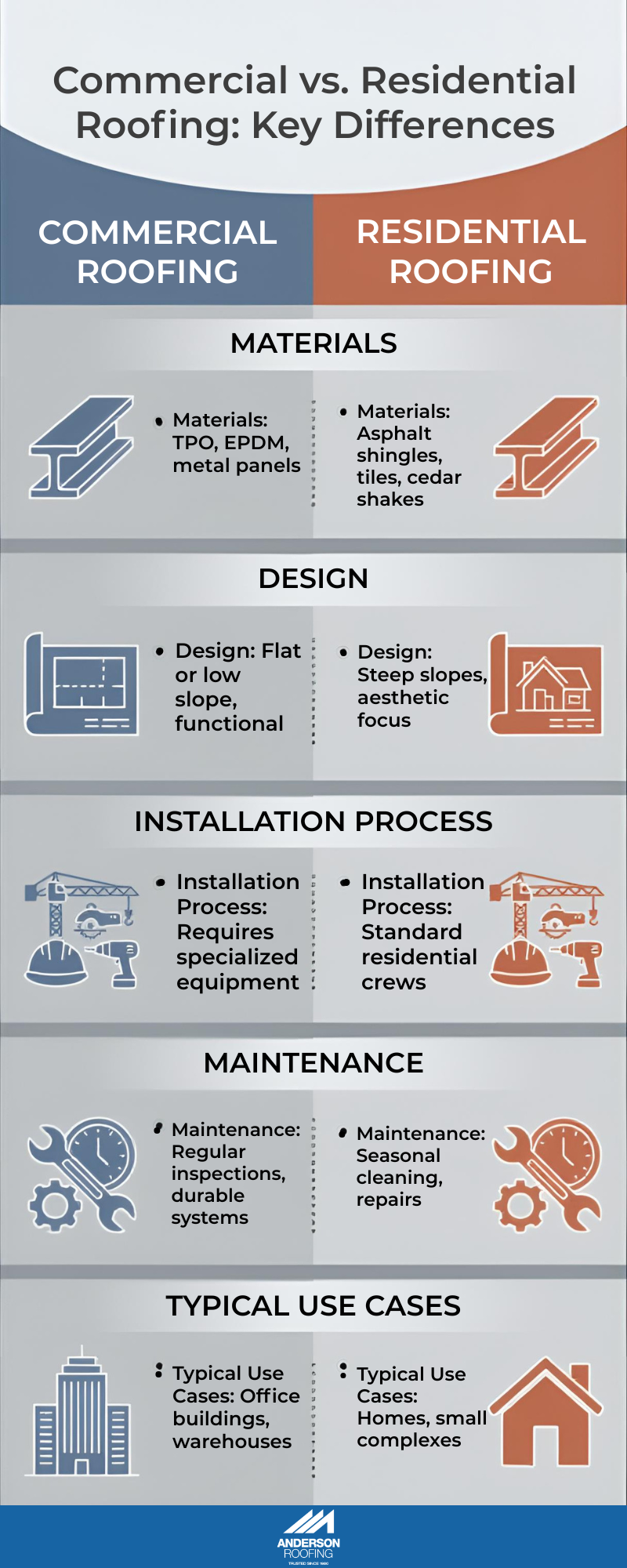
Residential homes usually feature pitched roofs. This steep slope allows rain, snow, and debris to slide off naturally, reducing the risk of water pooling and structural strain. The steep design also provides space for an attic, which plays a major role in a home’s ventilation and insulation strategy.
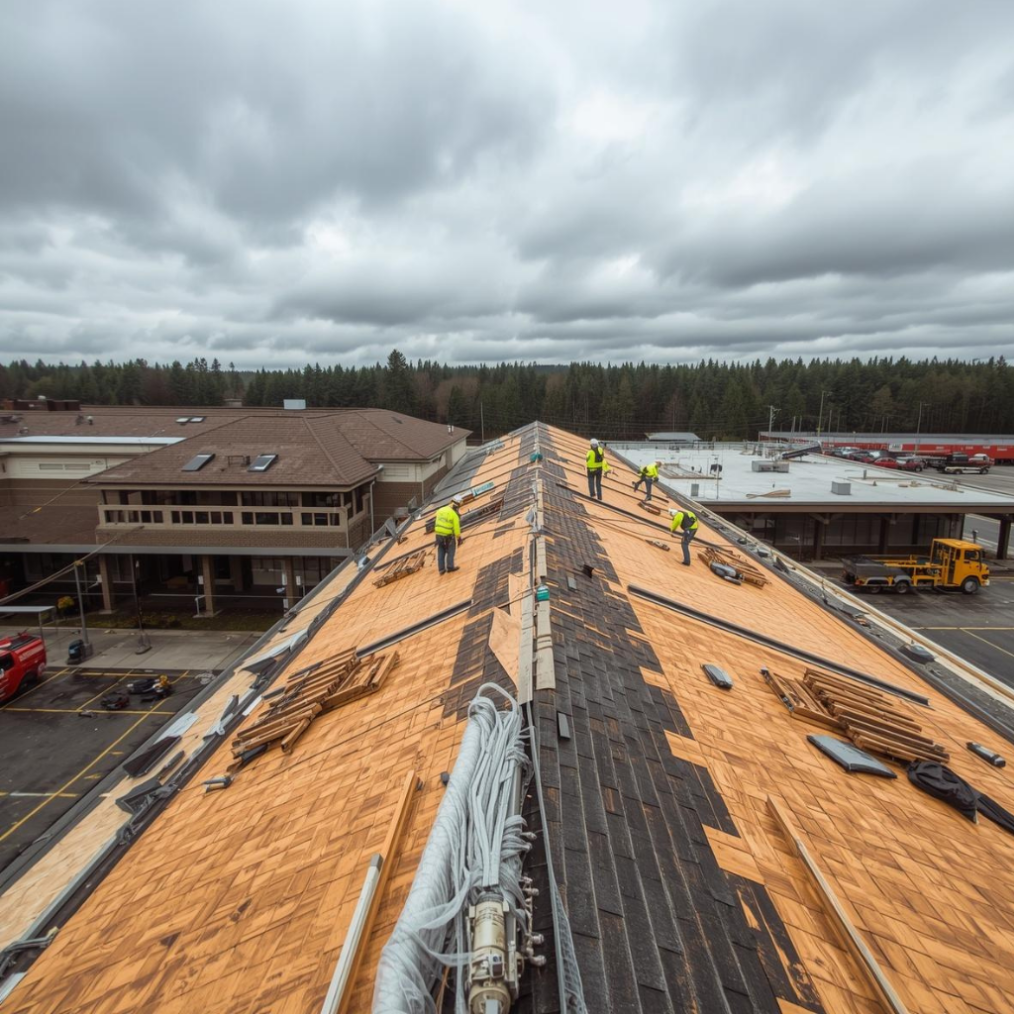
Commercial buildings typically require a flat or low-slope design. Because factories, retail centers, and office buildings have massive square footage, building a steep pitched roof would be highly impractical and excessively expensive. Instead, these flat roofs are engineered to cover large surface areas efficiently. They also serve a highly functional purpose, providing a secure platform to house heavy industrial HVAC units, exhaust systems, and external piping.
Roofing Materials
Because the structural designs differ so much, the materials used for each type of roof also vary significantly.
Homeowners generally choose materials that balance cost, durability, and aesthetics. Asphalt shingles remain the most popular choice due to their affordability and ease of installation. Other residential options include clay tiles, wood shakes, and standing seam metal roofs. These materials are manufactured in a wide variety of colors and styles to complement the architectural design of a neighborhood.
Commercial roofs demand highly durable, weather-resistant membranes that can span large, flat areas without leaking. Single-ply membranes like TPO (Thermoplastic Polyolefin) and EPDM (Ethylene Propylene Diene Terpolymer) are industry standards. Built-Up Roofing (BUR) and modified bitumen are also frequently used. These materials are designed to resist UV radiation, withstand standing water, and endure regular foot traffic from maintenance workers servicing rooftop equipment.
Installation and Maintenance
The scope and timeline of roofing projects change drastically depending on the property type.
A standard residential roof replacement can often be completed in a matter of days. The process is relatively straightforward for an experienced crew. Ongoing maintenance usually involves cleaning out gutters, replacing the occasional damaged shingle, and inspecting the flashing around chimneys and vents.
Commercial roofing projects are far more complex. The installation process takes longer and requires specialized knowledge to properly seal around heavy machinery and drainage systems. A successful WA Commercial Roof Installation involves multiple layers of insulation, decking, and specialized adhesives to ensure a watertight seal over a massive area. Maintenance is also more intensive. Property managers must schedule regular inspections to check for pooling water, membrane punctures, and deteriorating seals around HVAC curbs.
Choosing the Right Roofing Partner
Roofing is not a one-size-fits-all industry. A contractor who excels at nailing asphalt shingles on a suburban home may not have the equipment or training to heat-weld a TPO membrane on a 50,000-square-foot warehouse.
When planning your project, you need a team that understands the unique building codes, zoning laws, and safety regulations of your specific sector. As a trusted Redmond WA Roofing Contractor, Anderson Roofing possesses the specialized skills required for both large-scale commercial facilities and residential homes.
Frequently Asked Questions About Roofing Systems
How long do commercial and residential roofs last?
The lifespan of any roof depends heavily on the materials used and the quality of maintenance. A typical residential asphalt shingle roof lasts between 15 and 25 years. Metal residential roofs can last 50 years or more. Commercial flat roofs typically have a lifespan of 20 to 30 years, depending on the membrane type and how well it is protected from foot traffic and standing water.
Can residential materials be used on a commercial building?
It depends entirely on the building’s design. If a small commercial building features a pitched roof, residential materials like asphalt shingles or metal panels can absolutely be used. However, you cannot use shingles on a flat commercial roof, as they require a steep slope to shed water properly.
Secure Your Property with Anderson Roofing
Whether you are building a new corporate headquarters or replacing the aging shingles on your family home, selecting the right roofing system is a major investment. Understanding the differences in design, materials, and maintenance requirements ensures your property remains safe, efficient, and protected from the elements.
Ready to start your next roofing project? Contact Anderson Roofing today to schedule a comprehensive inspection and discover the best solutions for your specific property needs.